
If you pay for OnlyFans subscriptions monthly, the charges arrive one at a time and never feel large. A quarterly spending review is the only way to see the full picture, because three months of small renewals add up to a number most subscribers never calculate. The point of this exercise is not to cancel everything; it is to find out which pages earned their keep and which ones quietly drained a season of your budget.
You do not need spreadsheets with formulas or any tracking app. You need your bank or card statement, your subscription list inside the platform, and about forty minutes. That is enough to turn a vague sense of “I think I spend a lot” into a real figure you can act on.
Statement gathering
Before you judge any page, collect three raw numbers. Nothing else in this review works properly until you have them, because memory is unreliable. Most people remember the two or three subscriptions they use weekly and forget the rest entirely.
- Total charged across all three month-end cycles in the quarter.
- Number of active subscriptions still renewing as of the final month.
- Total paid in tips and pay-per-view messages for the same three months.
Pull these from your card statement, not from an estimate. Search the statement for the platform name and sum every line. If you used more than one payment method, repeat the search on each one.
One detail matters here: tips and pay-per-view are charged separately from subscriptions, so they appear as individual transactions. Group them into a single figure for now. You will break them down later.
Spend table
The next step is a per-page view, because a large total can come from one expensive subscription or from ten cheap ones. Both feel different to manage. Build a simple table with one row per page.
| Page | Month 1 | Month 2 | Month 3 | Quarter total |
|---|---|---|---|---|
| Page A | $4.99 | $4.99 | $4.99 | $14.97 |
| Page B | $9.99 | $9.99 | $9.99 | $29.97 |
| Page C | $0.00 promo | $9.99 | $9.99 | $19.98 |
| Page D | $15.00 | $15.00 | $15.00 | $45.00 |
A promotional first month is the only situation where a charge below the $4.99 minimum appears. There is no permanent base price under $4.99. If a line on your statement is lower than that in month one and normal afterwards, it was a promotion, not a discount you keep.
Tip: note the exact renewal date next to every page in this table. Half of all subscription waste comes from pages renewing two days after you decided to stop watching them.
Also record the price shown today, not the price you remember signing up at. Creators can change what they charge, and your table should reflect the current rate so next quarter’s comparison is honest.
Page value ranking
Now rank the pages. Value here is personal and has nothing to do with popularity. The only question is whether the page gave you something worth the monthly figure you paid.
- Did I open this page at least three times this quarter?
- Did I use the tipping or messaging features, or just the feed?
- Would I notice if this subscription disappeared tomorrow?
- Is the current price still within the typical $4.99-$15 range, or higher?
- Did the posting pace drop compared with the previous quarter?
Two or more “no” answers put a page in the review pile. That does not mean cancel immediately; it means the page has to justify itself next quarter. A single weak quarter can happen on any page.
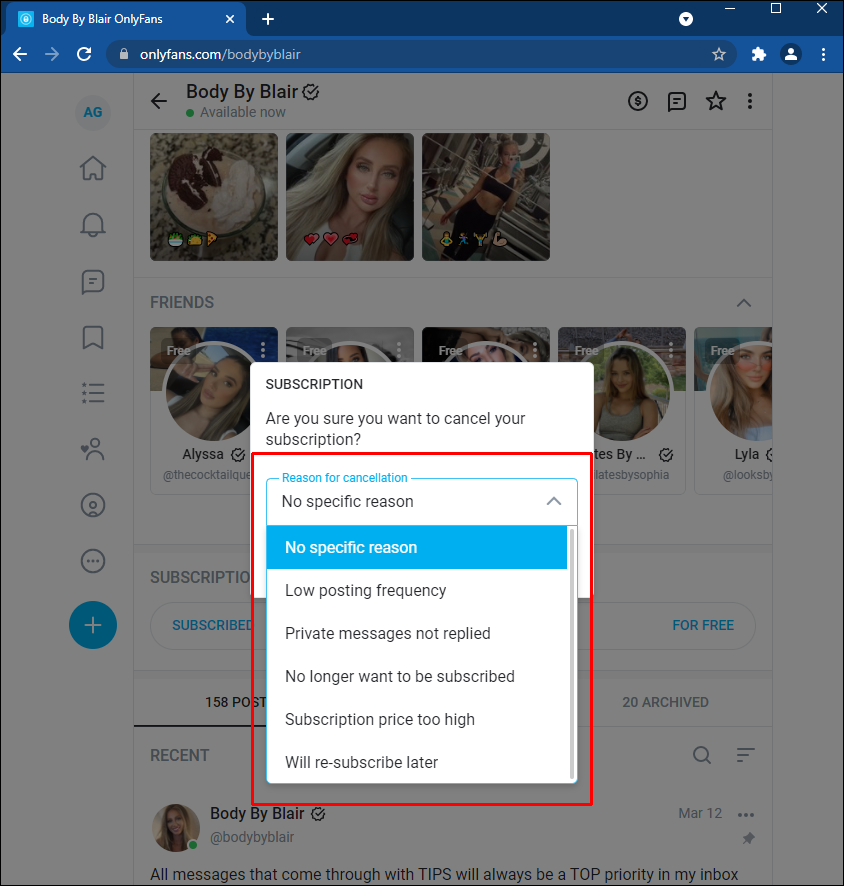
One practical note: when a creator raises the subscription price, auto-renew stops. Your access continues until the paid period ends, and then the decision becomes manual. That is a useful natural checkpoint for this kind of review.
Renewal overlap check
Renewal dates decide how your monthly cost actually feels. If four pages renew in the same week, that week looks expensive while the rest of the month looks cheap, even though the total is the same. Spread the dates and the spending becomes easier to track.
Compare every renewal date in your table and count how many land inside the same seven-day window.
- Signing up for several pages in the same evening, which stacks every future renewal.
- Ignoring a renewal date because the amount is small.
- Assuming a cancelled subscription is already inactive when the paid period is still running.
- Re-subscribing immediately after cancelling instead of waiting for the review date.
If three or more pages renew in the same week, consider cancelling one and re-subscribing later, once the current paid period ends. The content is usually still there when you return.
Forgotten follow audit
Almost every quarterly review turns up at least one subscription the subscriber never opened. These are the easiest savings, because no decision is required beyond a cancellation. A practical starting point is bestonlyfans budget hub, which lists pages by the signals above.
Sort your subscription list by last activity, not by name. Anything you have not opened since the quarter started goes into this category. For each page, choose one of three actions.
- Cancel now if you cannot remember why you subscribed.
- Keep for one more month only if a specific planned update is coming.
- Downgrade priority by pausing any notifications you receive.
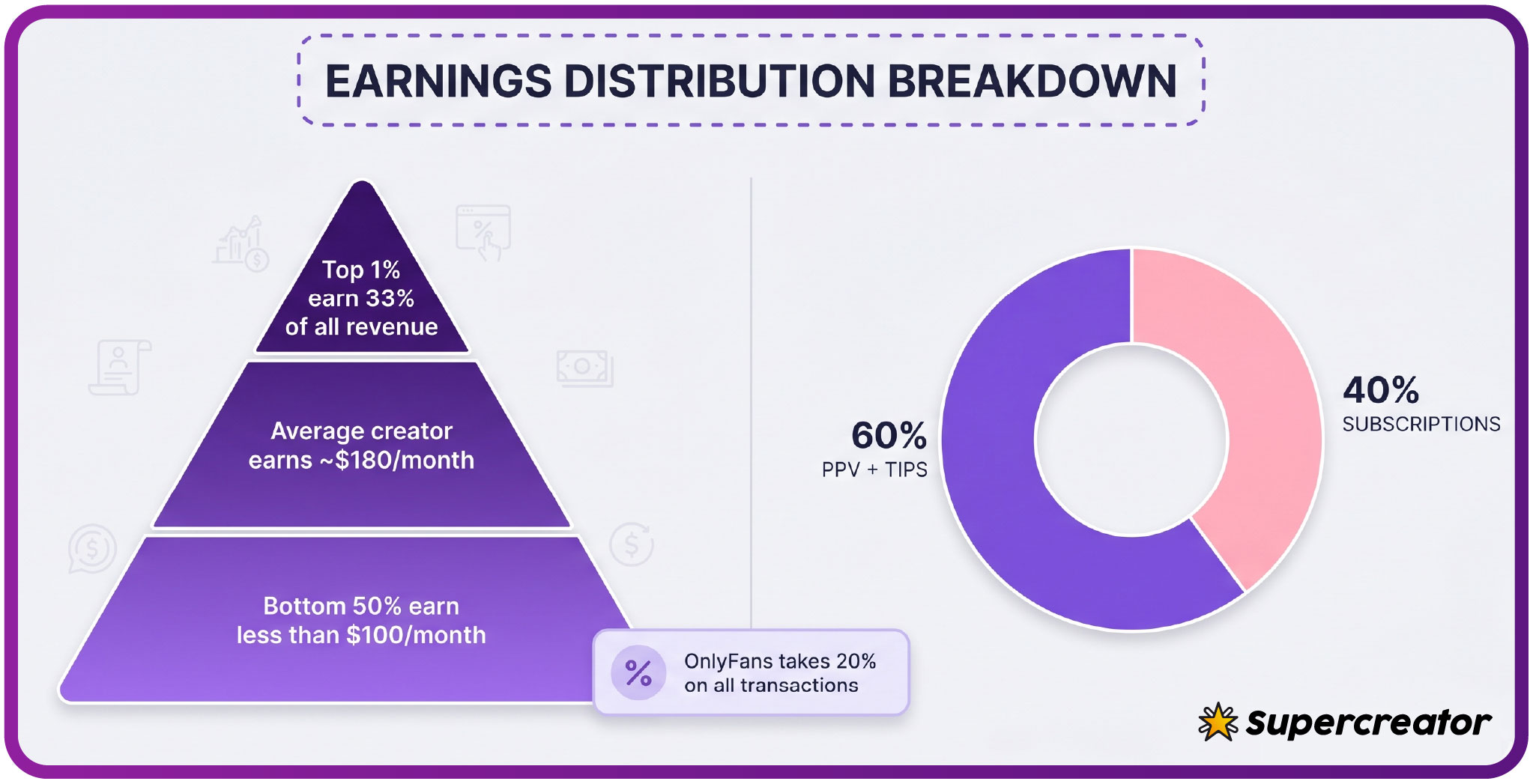
Remember that the creator keeps 80% of everything charged and the platform takes 20%. This does not change your decision, but it is worth knowing when a subscription you barely use still supports a creator you like.

Next-quarter caps
A review without a cap repeats itself next quarter. Set one number per page before the next three months begin, and write it in your notes. The simplest approach is a total monthly ceiling and a per-page ceiling.
Most paid pages sit between $4.99 and $15 per month, with many averaging $5 to $10. A per-page cap slightly above your highest current price gives room for one renewal increase without breaking the plan. Anything above $49.99 does not exist on the platform, so your cap is realistic by definition.
Free pages, where the price is set to $0, still cost money if you send tips or unlock pay-per-view messages. Include those in the cap or they will hide from the review.
Warning: a cap only works if it counts tips and pay-per-view messages the same way it counts subscriptions. Uncapped extra spending is the most common reason quarterly totals surprise people.
Reviewers often recommend checking prices across pages before committing. A ranking service such as BestOnlyFans compares public profile prices and promotions, and that comparison is a reasonable starting point when you are deciding between two pages with similar budgets. Use it as a reference, not as a substitute for your own statement.
Tip and PPV tally
Extra spending is where quarterly reviews produce the biggest discoveries. A subscription of $4.99 with regular tips can cost more than a $15 page you never interact with. Separate the two lines for each page.
| Page | Subscriptions | Tips | PPV | Quarter total |
|---|---|---|---|---|
| Page A | $14.97 | $10.00 | $24.00 | $48.97 |
| Page B | $29.97 | $0.00 | $6.00 | $35.97 |
| Page C | $19.98 | $5.00 | $18.00 | $42.98 |
Once the two columns sit side by side, the pattern is usually clear. Some pages earn most of their cost through messages; others are pure subscriptions. Pages that appear in both columns generously deserve a closer look at what you actually received.
A directory-style ranking from a comparison site can help here too. The BestOnlyFans listing format groups public profile details so you can see activity and media counts in one place, which is useful when two pages have similar prices and you want a tiebreaker.
A data breach at any service can leak an email address and a password reused elsewhere.
Review cadence setup
The review only pays off if it repeats. Three months is long enough to see a pattern and short enough to catch a bad subscription before it costs a year. Put four actions in your calendar now, at the same point in every quarter.
- Gather the three totals from your statements during the first week of the new quarter.
- Rebuild the per-page table and note every current price and renewal date.
- Run the forgotten-follow audit and cancel anything you have not opened.
- Reset the per-page cap and record it in the same note as last quarter’s figure.
Keep every quarterly note in one place. After a year you will have four data points per page and no guesswork left. Comparison sites like the bestonlyfans budget hub exist precisely because the platform offers no built-in discovery or spending overview, so a personal record fills that gap.
The review takes under an hour and typically removes one or two subscriptions that were no longer worth their price. That is the whole method: totals, table, ranking, caps, repeat.
BestOnlyFans refreshes its rankings every month.
FAQ
Is there any subscription below $4.99?
No. The minimum base price is $4.99, and only a promotional first month can dip below that. Any lower charge is temporary and returns to the normal rate afterwards.
Why did my auto-renew stop without me cancelling?
When a creator raises the subscription price, auto-renew is switched off. Your access lasts until the current paid period ends, and then you decide whether to renew at the new price.
Do free pages cost anything at all?
A free page sets the price to $0, so there is no subscription charge. It can still cost money through pay-per-view messages and tips, which is why those belong in your quarterly tally.
How much does the platform keep from each payment?
The platform fee is 20% on subscriptions, tips and pay-per-view messages. The creator keeps the remaining 80% of every charge you make.